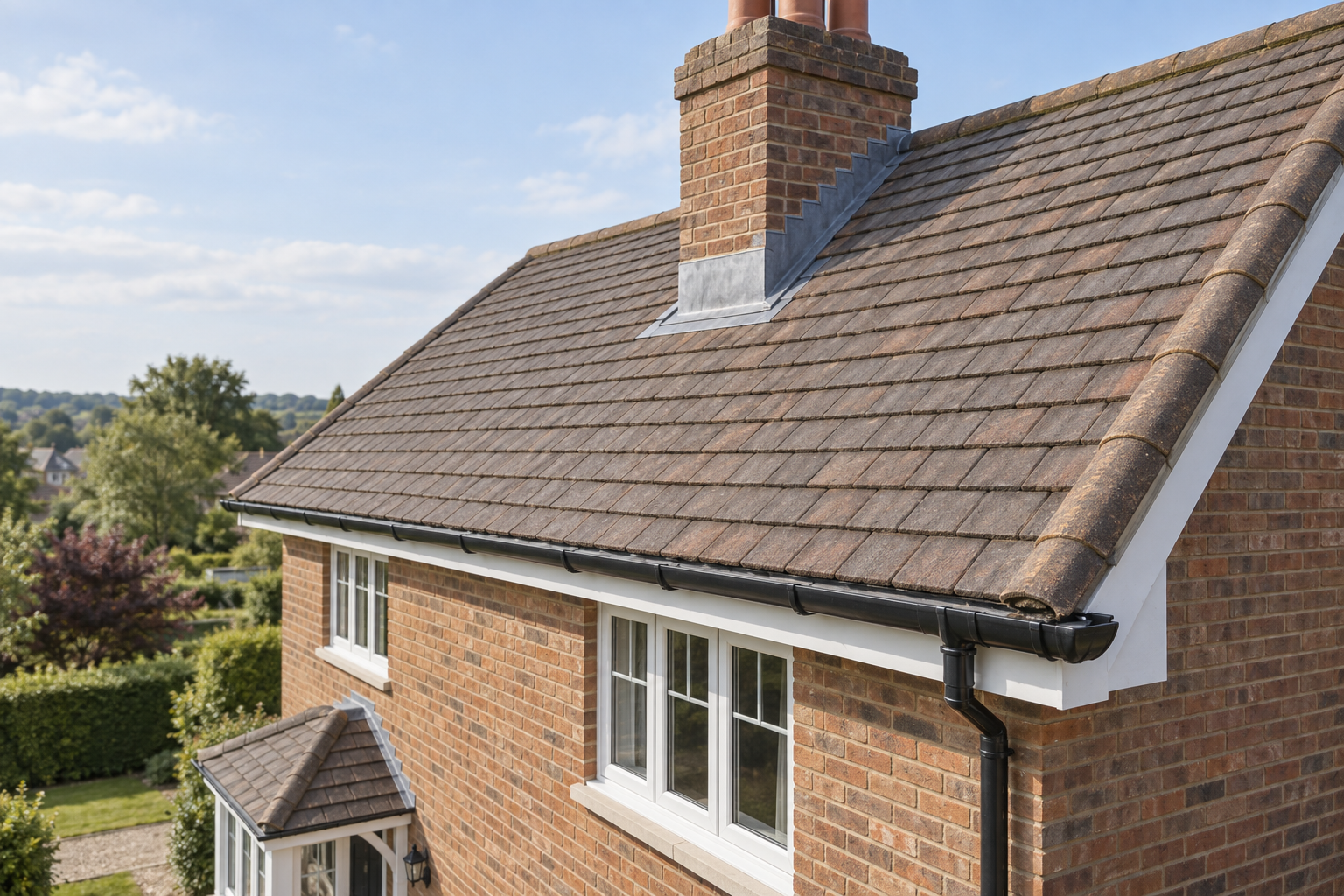
5 years' recorded experience. Domestic properties only. Roof and gutter leaks distinguished.
Water rarely respects the shortest route. It can enter around a cracked tile, valley, chimney flashing or flat-roof edge, then travel along underlay and timbers before staining the ceiling somewhere else. We investigate the external details linked to the affected area rather than repairing directly above the indoor mark and hoping for the best. Repeated staining, drips after rain and damp roof timbers all help us narrow down when and where the roof is letting water through.
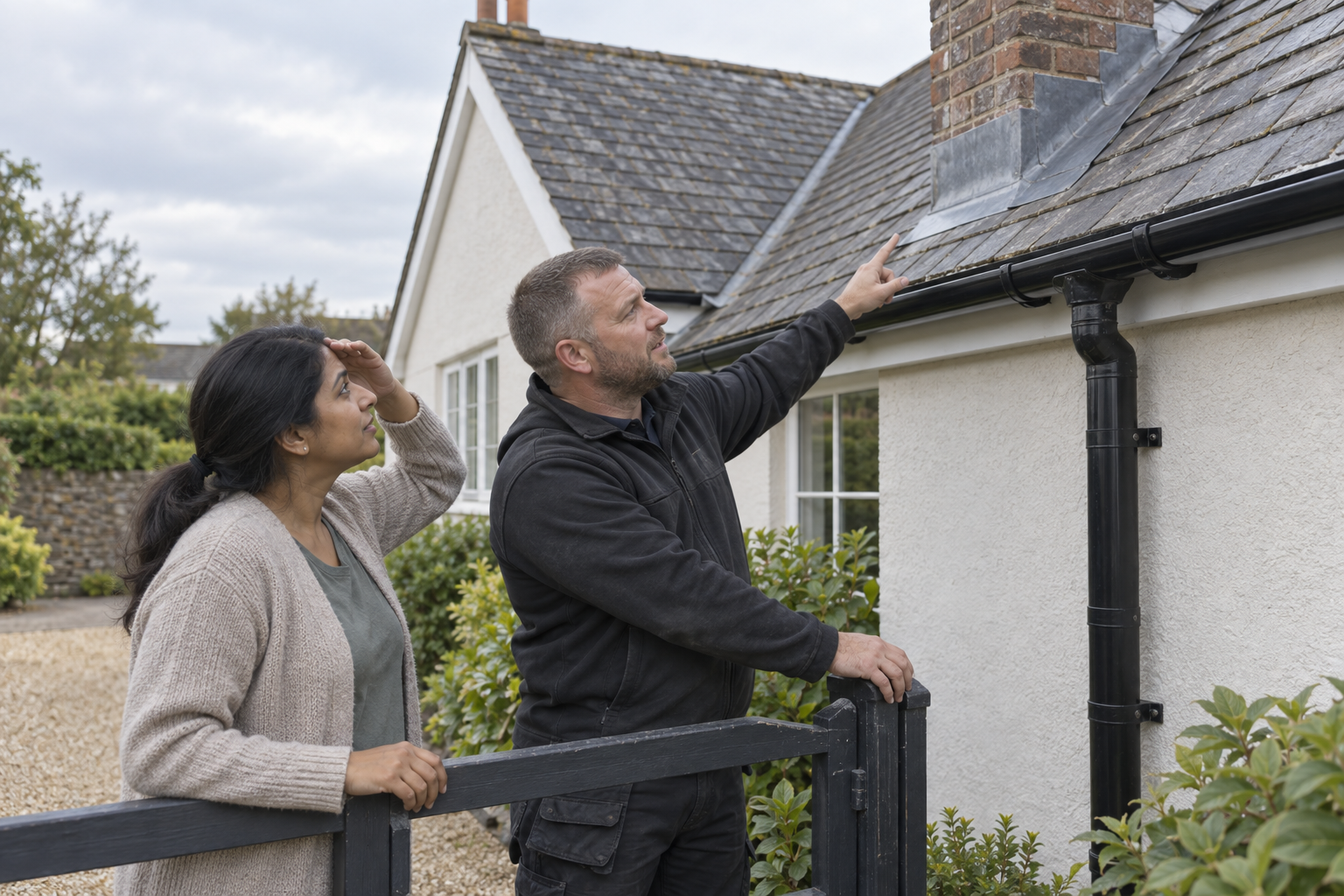
Water running down an outside wall may come from blocked or failed guttering rather than through the roof itself. We make that distinction before recommending work, checking nearby rainwater components alongside tiles, flashings, penetrations and junctions. Once we locate the source, we repair the failed detail and restore weather protection around it. The aim is to stop recurring entry, not merely dry the visible patch until the next spell of rain.
We follow the evidence beyond the position of the internal damp mark.
We separate external overflow from water entering through the roof.
We repair the failed detail and review the weatherproofing around it.
Water can move along underlay, rafters and other surfaces before dripping inside. The point where you see staining may therefore be some distance from the opening. We use internal clues and an external inspection to trace the likely route.
Yes. An overflowing or leaking gutter can soak external walls and roof-edge details, while a roof defect allows water into the building. We inspect the relevant guttering and roof area so the repair is aimed at the correct source.
Tell us where staining or dripping appears, when it happens and whether wind direction affects it. Safe photographs and details of nearby chimneys, valleys or flat-roof sections can also help us plan the initial inspection.
Call us with details of the damp, rainfall pattern and affected roof area so we can plan an inspection.