
5 years' recorded experience. Cleaning, repairs and replacement covered. Domestic properties only.
Gutters need the correct fall, sound brackets and sealed joints to carry water towards clear outlets and working downpipes. When one part fails, rain can spill onto fascias, stain walls or collect beside the property. We inspect the system to determine whether debris, poor alignment, a leaking union or damaged material is responsible. Because we also work on roofs, we can check whether suspicious staining comes from gutter overflow or from a defect higher up the covering.
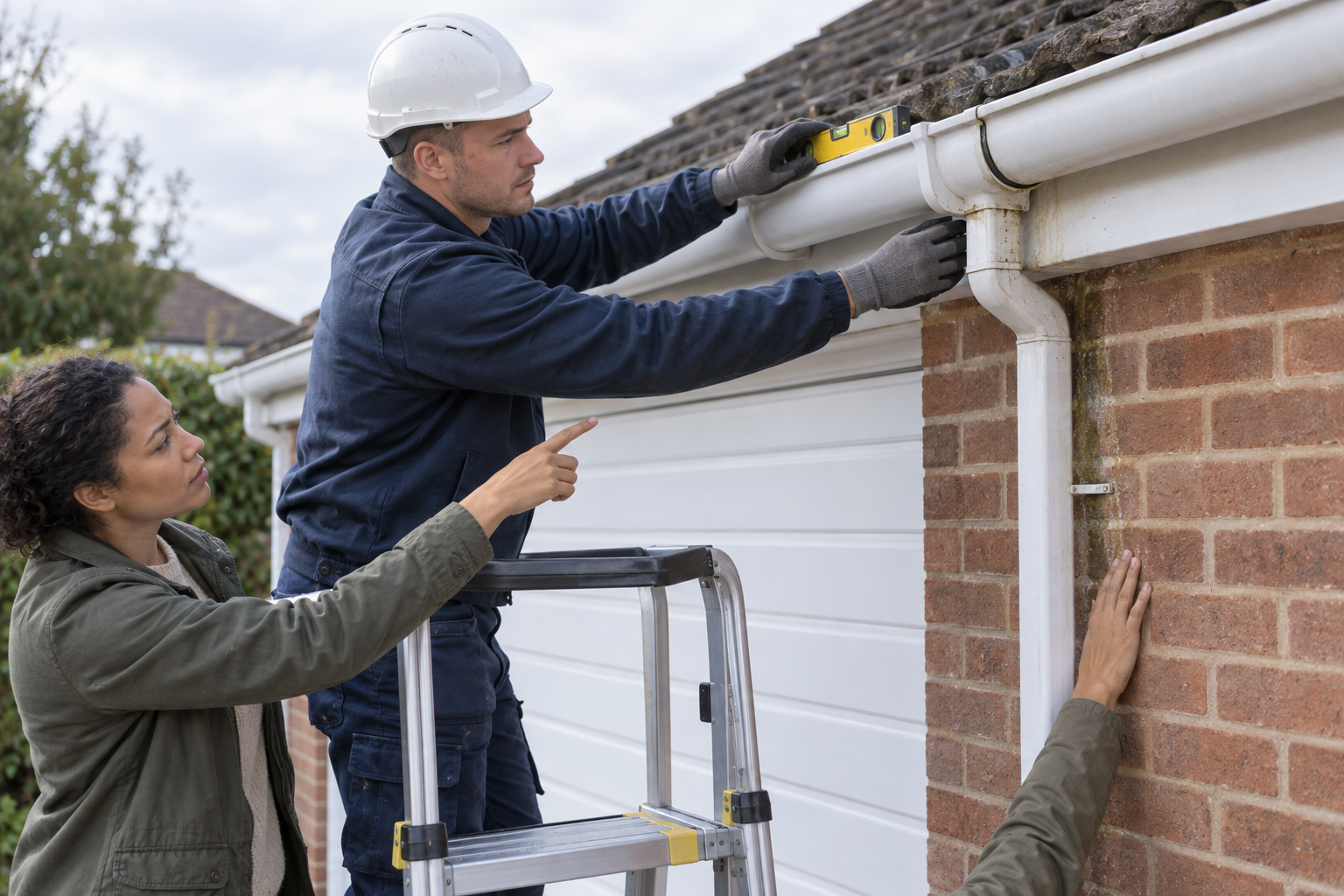
Not every gutter problem needs a new system. A blocked outlet may need clearing, while a loose bracket or failed seal can often be repaired locally. Distorted runs, widespread cracking or repeated joint failure may make replacement more sensible. We assess how water moves through the section and explain the proportionate option. That keeps attention on effective drainage rather than replacing sound parts simply because one joint has started dripping.
We check whether water comes from the gutter or the covering above.
We follow water from the gutter run through outlets and downpipes.
We retain serviceable sections where a focused fix is still practical.
The system may be partly blocked, poorly aligned or unable to move water quickly enough through the outlet. We inspect the run, fall and downpipe entry to identify what restricts the flow before deciding on cleaning or repair.
Yes. Overflow can soak the roof edge or external wall, while a roof defect can send water behind the gutter. We inspect both likely sources where the signs are unclear, helping avoid a gutter repair that leaves the true roof fault untouched.
No. Isolated seal, joint or bracket faults may be repairable. Replacement becomes more practical where runs are distorted, heavily cracked or failing repeatedly. We explain the condition of the affected section before agreeing the work.
Call us to discuss overflow, dripping joints, sagging sections or damp around the roof edge.