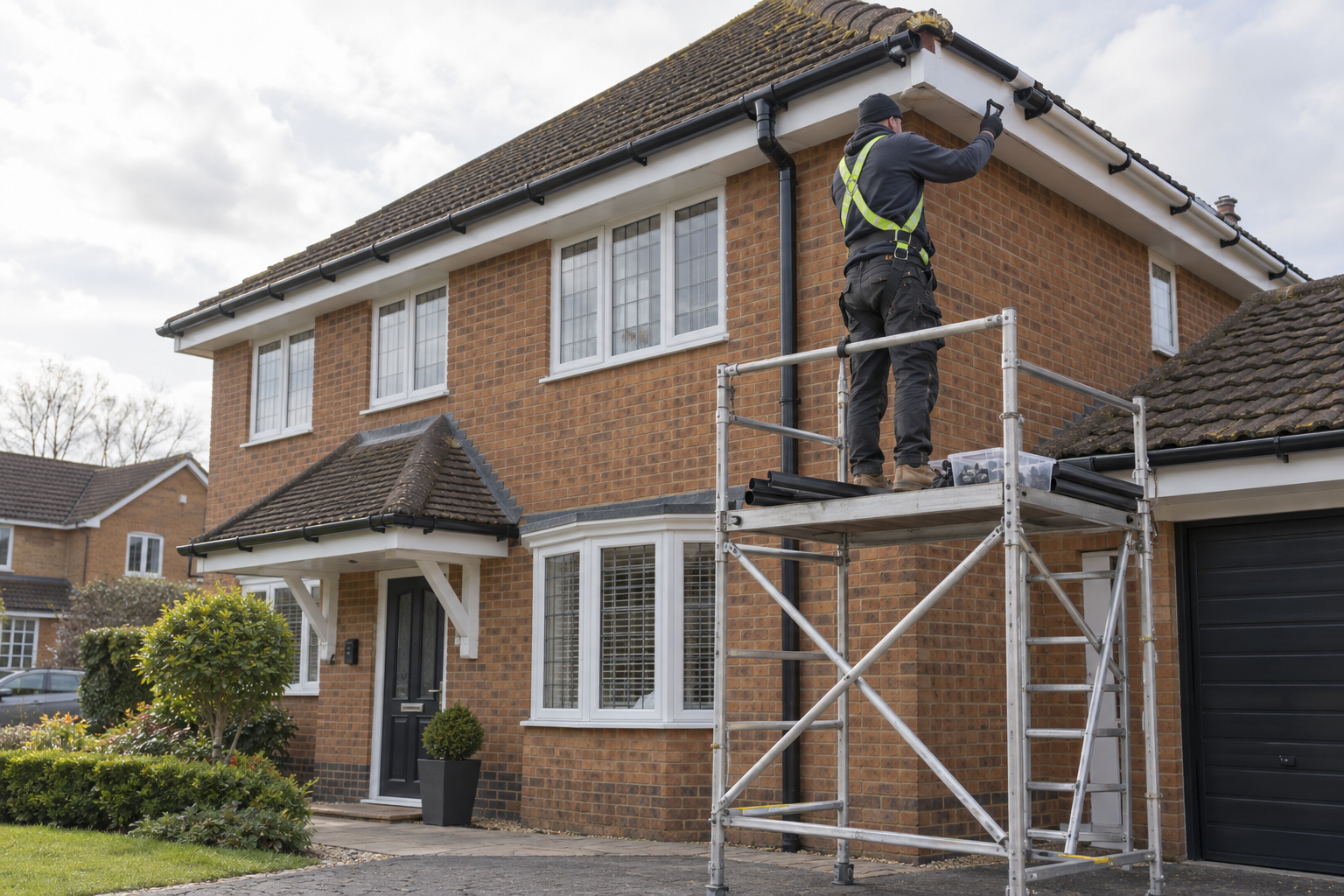
5 years' recorded experience. Domestic systems only. Outlets, downpipes and roof edges considered.
Repeated leaks often point to more than one failed seal. Cracked material, distorted runs, poor falls and widespread bracket problems can make full or partial replacement the more sensible option. We assess the roof edge, outlet positions and route to the downpipes before specifying new guttering. The size and profile need to suit the property, while the finished system should sit neatly with the existing fascias and connected rainwater goods.
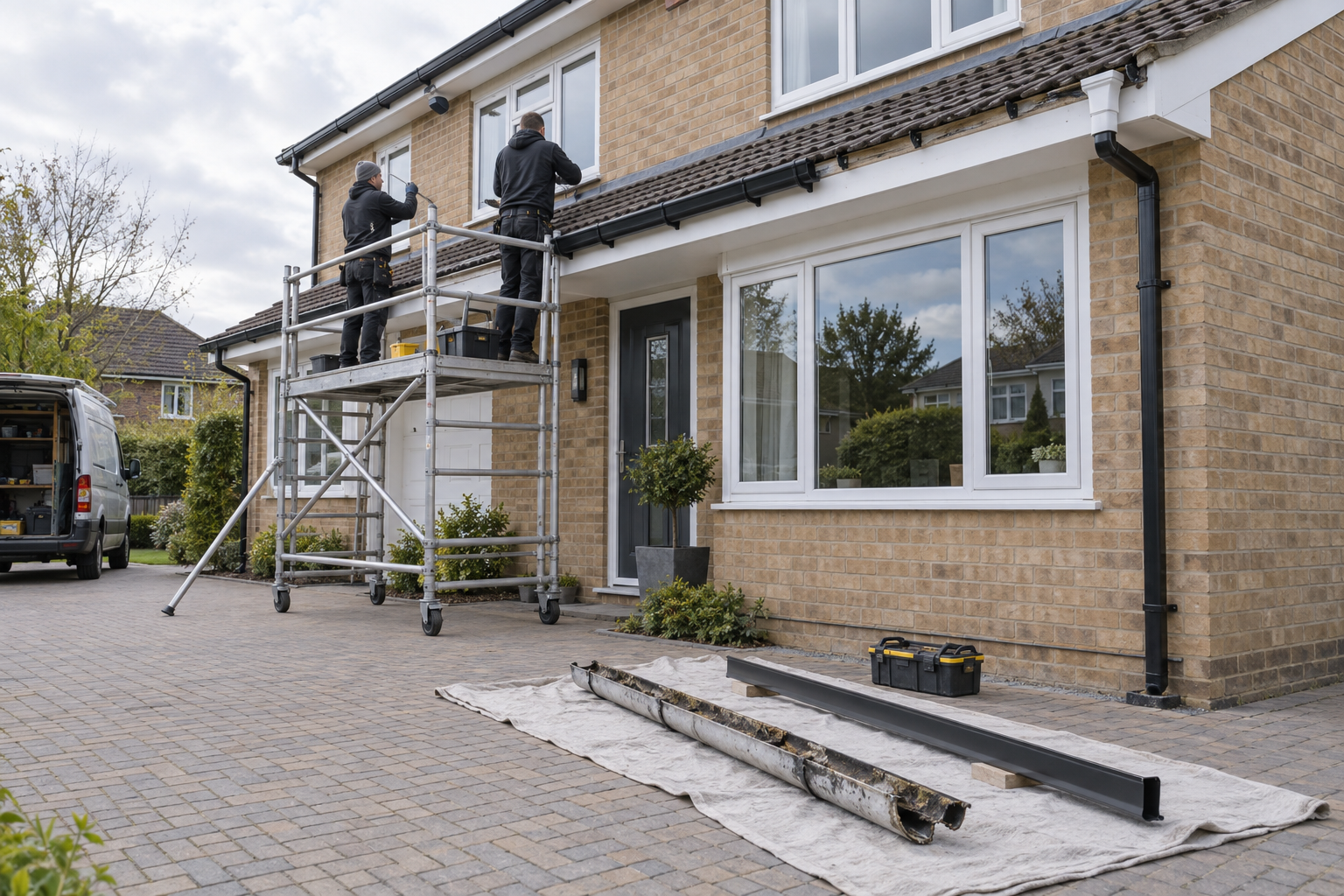
We remove failed sections and inspect the fixing points before setting out new brackets to the required fall. Gutter runs are then fitted and connected to outlets and downpipes, with joints secured along the route. Once installed, we check the flow so water reaches the downpipe rather than sitting in low points or escaping at unions. You get a replacement based on how the system needs to drain, not just where the old brackets happened to be.
We align brackets so water moves towards the intended outlet.
We inspect the roof edge before attaching the replacement system.
We check joints and water movement after the new runs are fitted.
Replacement may be more practical when cracking is widespread, runs are distorted or joints keep failing in several places. We assess the whole affected section so one new component is not attached to material that is already nearing failure.
We consider the roof edge, outlet positions, existing rainwater goods and the appearance of the property. The chosen system must direct water effectively and connect sensibly with the downpipes as well as fit the roofline.
Yes. We check that water follows the intended fall, passes through the outlets and reaches the downpipe without leaking from the joints. Testing also helps reveal unwanted low points before the installation is considered complete.
Call us to discuss repeated leaks, sagging runs or widespread damage around your domestic roofline.