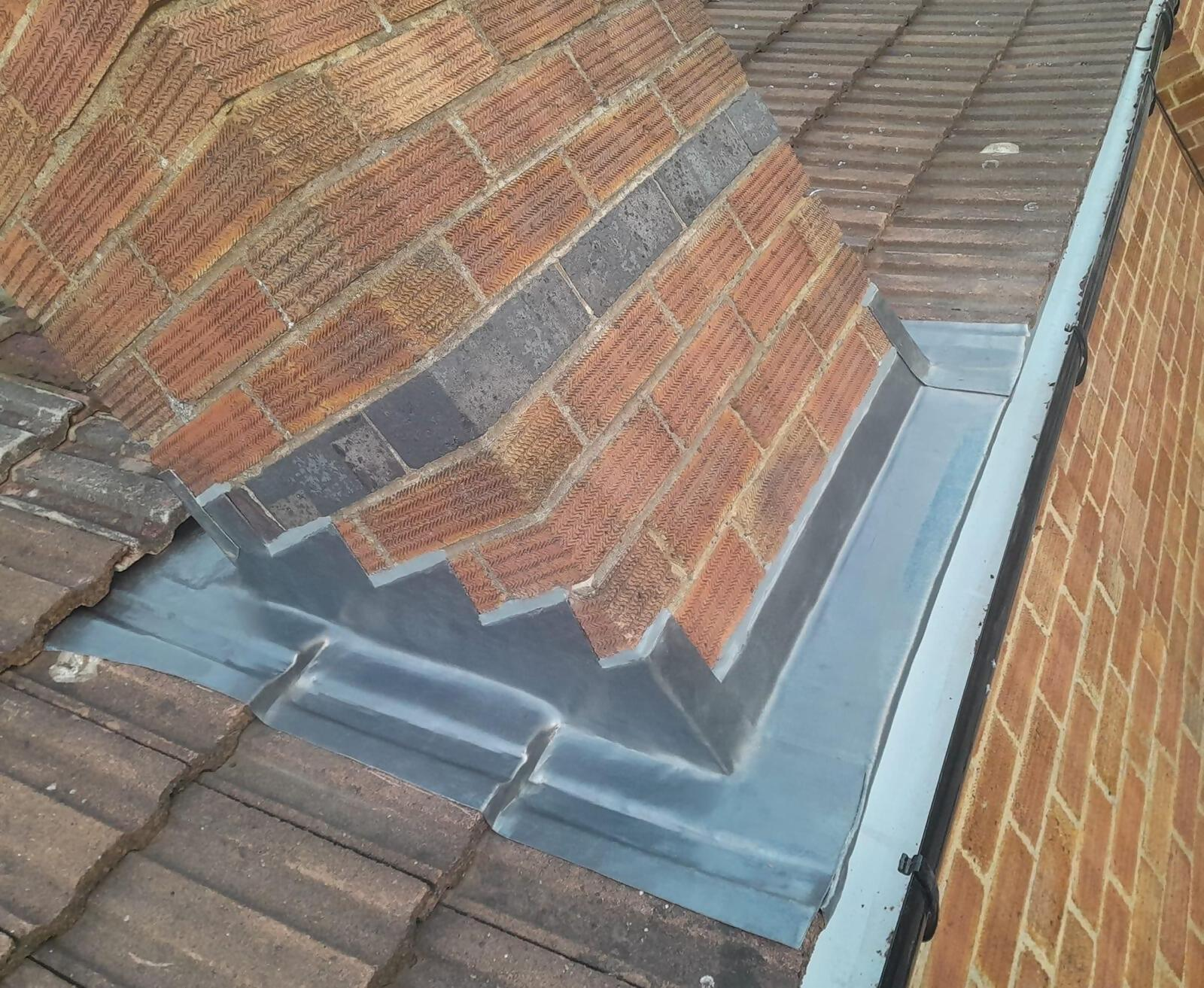
5 years' recorded experience. Domestic properties only. Pointing, flashing and nearby tiles assessed.
Damp near a chimney does not always mean the masonry alone has failed. Water can enter through deteriorated pointing, cracked mortar details, defective lead flashing or damaged tiles around the stack. We inspect the exposed chimney and the junction where it meets the roof covering, looking for the route rain is taking. Treating these connected details together avoids repointing sound masonry while leaving failed flashing untouched.
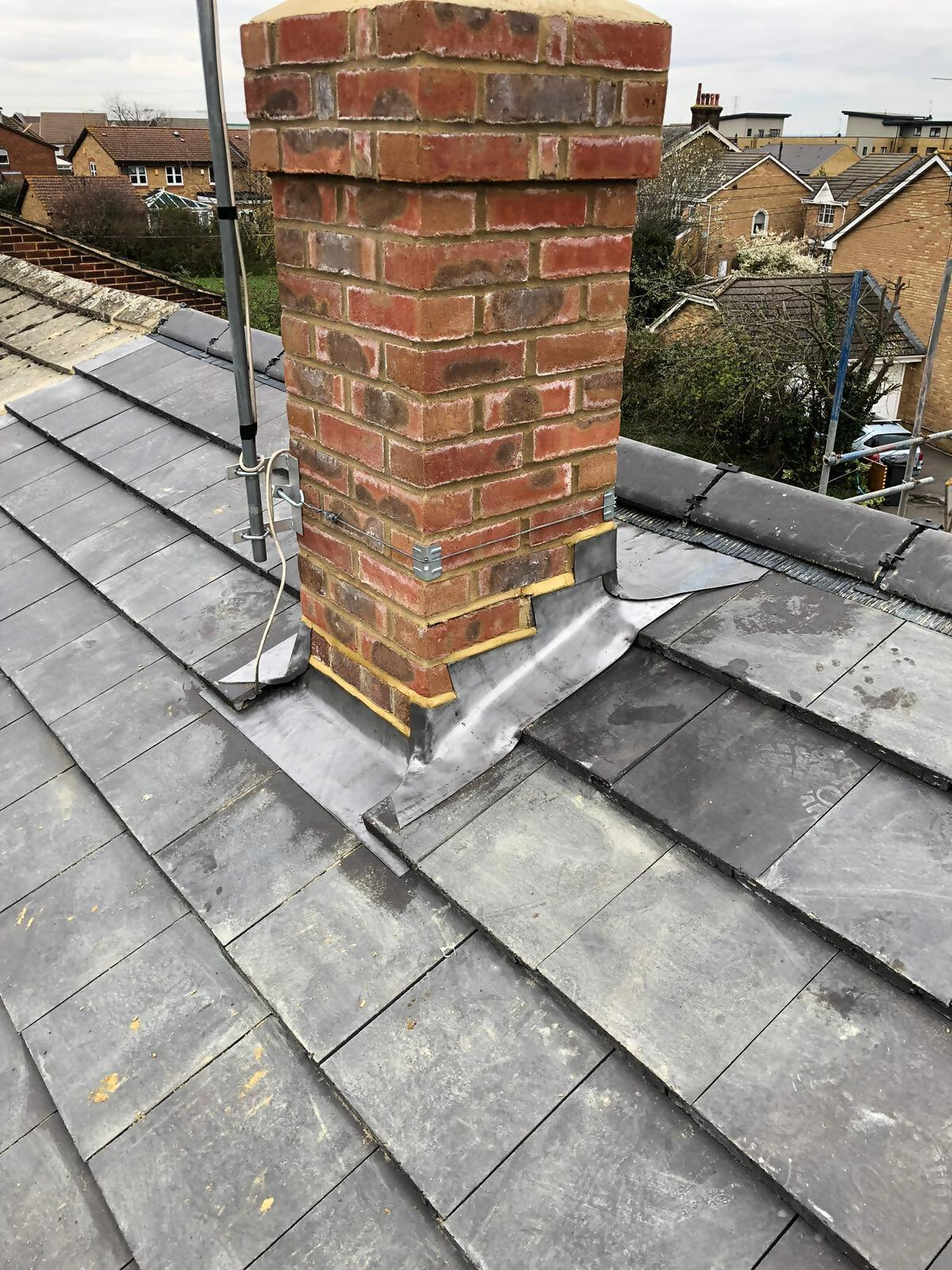
Chimneys sit at one of the most exposed parts of the property, so stability and access need thought before work begins. Depending on the condition found, the job may involve repointing sound masonry, renewing defective flashing or reinstating nearby tiles. We integrate the repair with the surrounding pitched or flat-roof details to restore a weather-resistant junction, rather than treating the stack as an object separate from the roof below.
We check where the chimney, flashing and roof covering meet.
We identify deteriorated pointing rather than disturbing sound areas.
We restore nearby tiles and weatherproofing as part of the repair.
No. Failed flashing is one possibility, but deteriorated pointing, mortar details or nearby roof coverings can also admit water. We inspect the stack and the roof junction to identify the most likely route before deciding what to repair.
Local repointing may be suitable where the surrounding masonry and mortar remain sound. We assess the condition and stability first because loose or widespread deterioration can require a broader scope than replacing mortar in one visible gap.
The work takes place at an exposed high point, often above steep roof coverings. We consider roof form, stack position and safe working access before the job begins rather than relying on a ladder arrangement that does not suit the task.
Call us to describe staining, visible mortar loss or flashing concerns around your domestic chimney.